






Extractions
There are many reasons a tooth, other than a wisdom tooth, may need to be removed. A tooth may be deemed unrestorable due to a deep cavity, periodontal problem, fracture, or a failed root canal.
Our procedures can be performed using:
• Local anesthesia (“Novocain”)
• Local anesthesia and nitrous oxide (“laughing gas” or “sweet air”)
• Local anesthesia and intravenous (IV) sedation (sleeping, or twilight sedation)
• Local anesthesia with general anesthesia
At PM Dental Care, we will make this potentially difficult experience a pleasant one.
Wisdom Teeth
By the age of eighteen, the average adult has 32 teeth; 16 teeth on the top and 16 teeth on the bottom. Many mouths, however, are only able to hold 28 teeth. When 32 teeth try to fit in a mouth that holds only 28 teeth, the result can be significant pain for the individual. These four other teeth are your wisdom teeth.
Should I Remove My Wisdom Teeth?
Wisdom teeth are the last teeth to erupt within the mouth. When they align properly and gum tissue is healthy, wisdom teeth need not be removed. However, this does not generally happen. Extracting wisdom teeth becomes necessary when they are prevented from properly erupting within the mouth. Often, they grow sideways, partially emerge from the gum, or remain trapped beneath bone and gum. Impacted teeth can take many positions in the bone as they work to find a route that will enable them to erupt successfully.
Impacted teeth can cause many problems. When they are partially erupted, the opening around the tooth allows bacteria to grow and more often than not causes an infection. This often results in swelling, stiffness, illness, and pain. Pressure from the erupting wisdom tooth can even cause other teeth to shift, as well as disrupt the orthodontic or natural alignment of teeth. Removing the impacted tooth or teeth usually resolves these problems.
Oral Examination
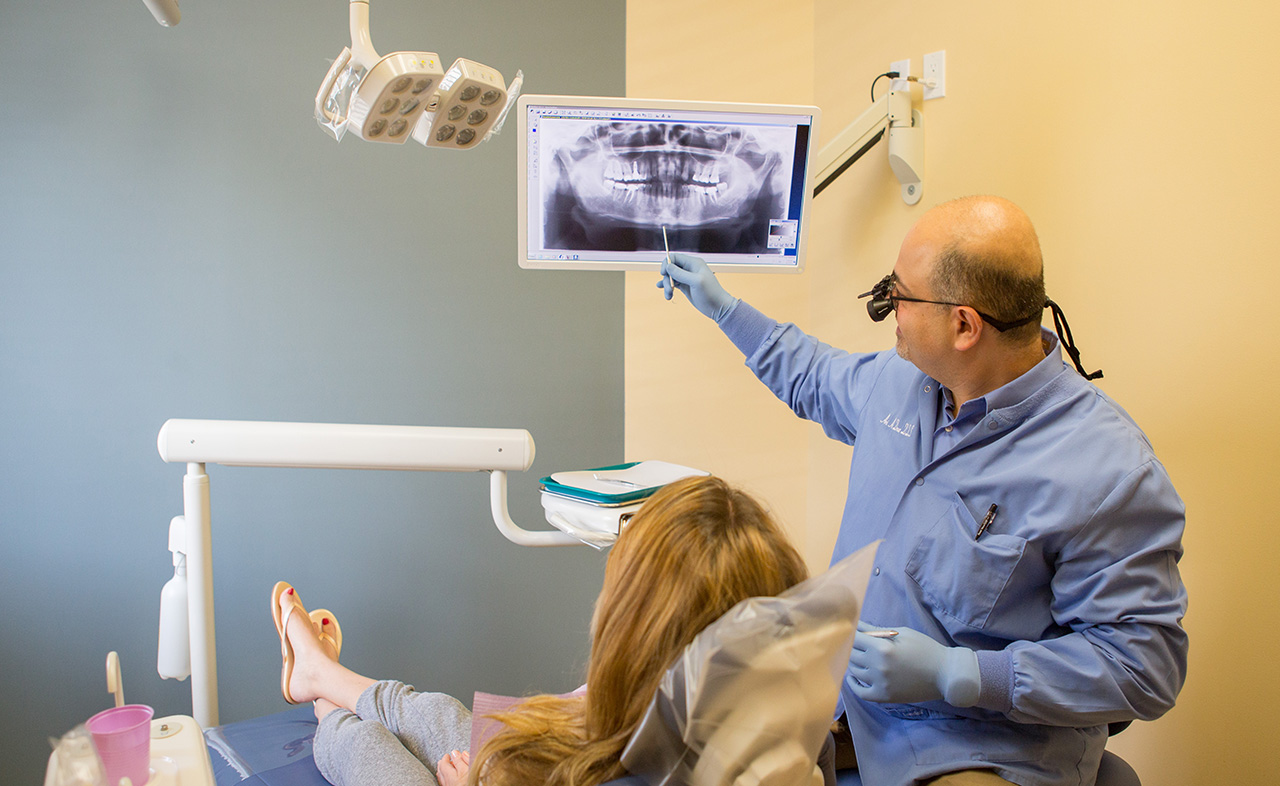
With an oral examination and X-Rays of the mouth, Dr. Druz can evaluate the position of the wisdom teeth and predict if there may be present or future problems. Studies have shown that early evaluation and treatment result in the best outcome for the patient. Patients are generally first evaluated in the mid-teenage years by their dentist, orthodontist, or oral and maxillofacial surgeon.
All outpatient surgery is performed using anesthesia to maximize patient comfort. Our physicians are trained, experienced and licensed to provide an array of different anesthesia for patients to select the best option for each patient.
Removal
In most cases, the removal of wisdom teeth is performed under local anesthesia, laughing gas (nitrous oxide/oxygen analgesia sedation) or general anesthesia. These options along with the surgical risks (i.e. sensory nerve damage, sinus complications) are discussed before the procedure is performed. Once the tooth or teeth are removed, the gum is sutured. Following the procedure, you will rest in our office, under our supervision, until you are ready to be taken home. Upon discharge, your post-operative kit will include post-operative instructions, prescriptions for any needed pain medication or antibiotics, and a follow-up appointment. Having another person available to drive you home from the procedure is a necessity.
Dental care when you need us most
Flexible late hour & weekend appointments including Emergency Care. Our team of specialists is dedicated to working together with you to help you with all your dental needs.
tel: (516) 746-1111
121 Jericho Turnpike, Mineola, NY 11501


tel: (516) 746-1111 | 121 Jericho Turnpike, Mineola, NY 11501 | Copyright PM Dental Care, PLLC
Designed & Developed by FraScaDesignGroup.com | Hours by Appointment, Call for Emergencies 7 Days a Week